

An auto recycling company with more than 60 years of experience purchases over 20,000 used vehicles each year. Each vehicle may be resold, dismantled for parts, or recycled for materials, making its potential value dependent on several changing markets.
Technica AI developed a market-informed appraisal and planning system that connects purchasing decisions with downstream parts demand and expected profitability. Following deployment, the project reported approximately 30% higher parts production without increasing vehicle purchases.
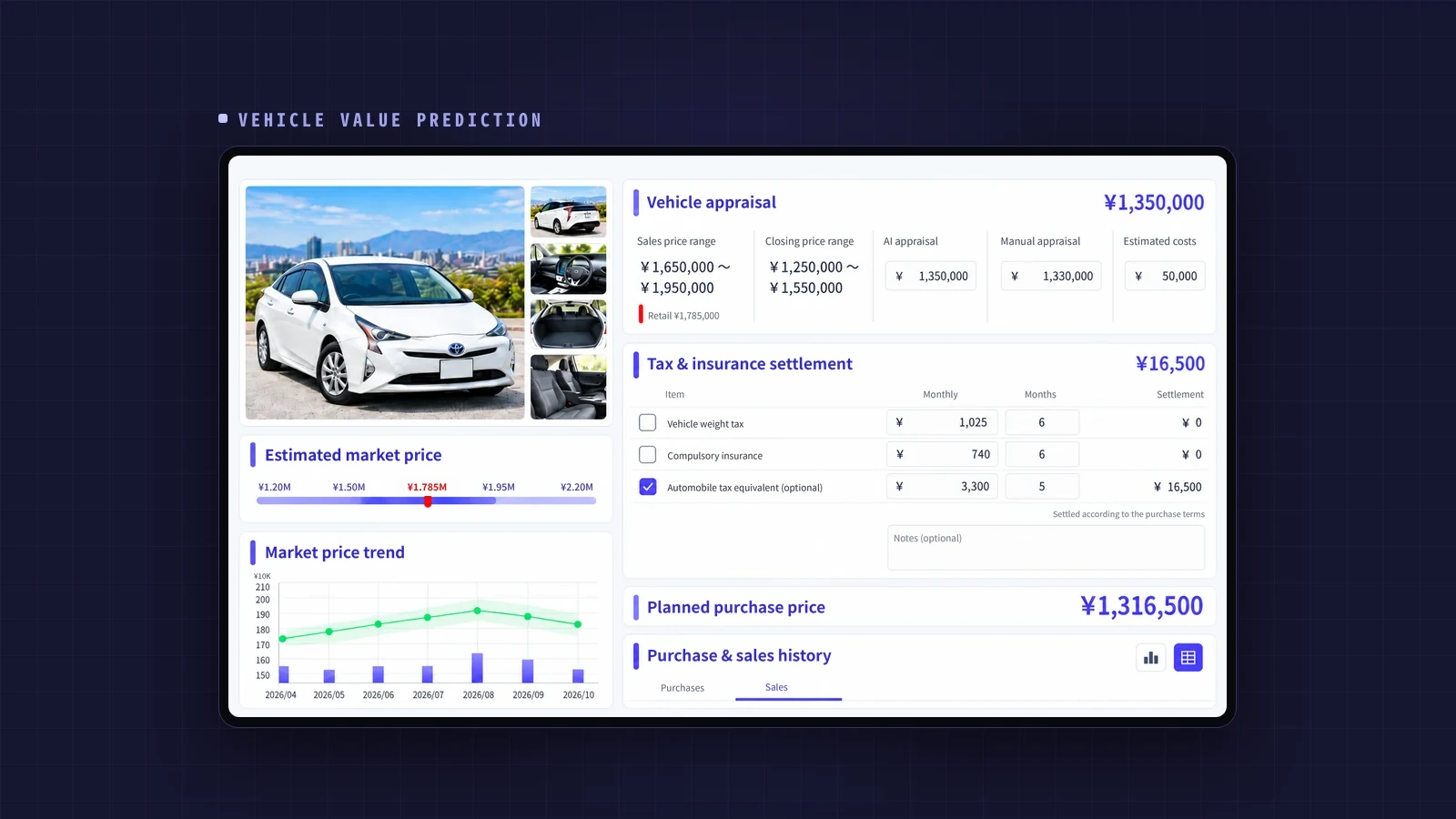
Different routes to value for every vehicle.
The client generates value through domestic resale, exports, used parts, and material recovery. The most profitable route depends on the vehicle’s condition, the market for its parts, and the costs of processing and sale.
As competition increased, purchasing more vehicles was not sufficient. Teams needed to decide which vehicles to acquire, at what price, and how best to use them.
Pricing decisions had to reflect fast-moving markets.
Accurate appraisal requires information about model, year, trim, mileage, equipment, and condition, alongside used-car prices, domestic and overseas parts demand, and material values.
Experienced appraisers understood these factors, but manually assessing them took time. Delays in quoting could mean losing a purchase opportunity, while estimates based on incomplete information could reduce the margin available after acquisition.
Working backward from potential value to purchase price.
The system estimates the value of alternative routes—vehicle resale, parts recovery, and material recycling—then considers associated costs and profit criteria when informing an appraisal.
The project tracks market information daily for approximately 200 major vehicle models and 140 types of parts. The project reports that these monitored categories represent more than 90% of transaction value. The same information supports decisions on which parts to recover and sell.
Parts production increased by approximately 30%.
Following deployment, the client shifted its decision framework from purchase volume toward expected profit per vehicle, linking vehicle acquisition to parts production and sales planning.
The project reported approximately 30% growth in parts production without an increase in the number of vehicles purchased. The reported measure was parts production volume; profit improvement was not quantified.
Better decisions across purchasing and downstream operations.
-
Faster appraisal decisions
Structured market information helps staff prepare purchase quotes more quickly.
-
Less dependence on individual expertise
Appraisal assumptions and market signals become easier to share across teams.
-
More informed recovery choices
Resale, parts, and material recovery can be evaluated against expected value and costs.
-
Coordinated business planning
Purchasing and parts production priorities can respond to changes in market demand.
From vehicle price estimates to profit-informed operations.
By combining accumulated appraisal experience with current market data, Technica AI helped the client coordinate purchasing and parts production around expected value rather than vehicle volume alone.