
01
Manage Topic Changes
Tracks the active request and unresolved steps when a customer changes topic. Configured rules guide whether to address the new request, resume the earlier task, or escalate a complaint.
 AI CUSTOMER SERVICE AUTOMATION
Natural Conversations. Process-Aware Service.
AIKNOW Answer automates customer conversations and service tasks across voice and chat. It uses business procedures, customer information and conversation context to clarify, answer, act and hand off. From agent assistance to direct customer service, integrations and permissions are set for the work you want to automate.
A service interaction involves deciding what to confirm, how to respond and which actions are permitted.
The right response to the same question changes with the product, the contract, the customer’s situation and what has been said so far.
A missed check or a wrong decision can lead to problems with billing, contracts, personal information or compliance.
Customers give vague answers, ask about something else midway, decline to answer, voice complaints or change what they called about.
Automation needs relevant evidence, defined business rules, and system-enforced authorization. Missing information, exceptions, and actions requiring approval follow the agreed clarification or handoff path.
 Context
Maintains permitted customer information, conversation history, collected details, and task state. Customer statements are distinguished from information verified through the configured checks.
 Process
Uses configured SOPs, required checks, decision criteria, branches, exceptions, and handoff conditions to guide the interaction.
 Knowledge
Retrieves relevant information from approved FAQs, manuals, product materials, and recorded cases within the user’s access scope. Source coverage and applicability affect the response.
Uses case context, procedures, and retrieved evidence to select an action within the configured scope. External system actions require appropriate authorization; sensitive operations follow agreed approval rules.
AIKNOW Answer applies the AIKNOW knowledge platform to customer service automation. Conversation context, procedure execution, and retrieval are application functions built on the platform’s knowledge capabilities.
Learn about AIKNOWTracks the active request and unresolved steps when a customer changes topic. Configured rules guide whether to address the new request, resume the earlier task, or escalate a complaint.
Requests clarification when information is unclear or required checks are incomplete. If the interaction cannot proceed within the configured rules, it follows the agreed handoff path.
Reuses collected information where the procedure permits, helping reduce repeated questions. Identity, consent, or other critical checks may still need confirmation or repetition.
Conversation handling is evaluated with realistic topic changes, unclear responses, refusals, and exceptions. Voice deployments also require evaluation of speech recognition, turn-taking, and response latency.
Start from existing SOPs, FAQs, manuals, and approved call or chat records. These assets need review, structuring, and validation against the intended service scope; additional rules may be required for gaps and exceptions.
SOPs and procedures are structured as Process Knowledge for checks, branches, and next steps. FAQs, manuals, and product materials provide Content Knowledge for responses. Procedure execution uses configured system integrations and permissions; retrieved content is supporting evidence, not authorization to act.
Analysis of approved interaction records identifies candidate patterns, exceptions, and operator decisions for review. Proposed changes require approval and testing before they become operational guidance.
Approved procedures and shared knowledge provide a common basis for automated service and operator review. Consistency depends on source quality, configuration, and ongoing evaluation.
Case context and clarification rules help manage topic changes and incomplete answers. Defined escalation paths support cases that need human judgment.
Reuse reviewed procedures and knowledge across operator assistance and direct AI handling. Expand automated responses and actions where evaluation results, permissions, and operational controls support the change.
Voice and chat deployments can support the examples below where procedures, data access, and integrations are configured. Identity verification, action permissions, approval rules, and handoff requirements determine what may be automated.
Address and registration changes, payment method changes, document reissues, cancellations and more.
Questions about pricing, contract terms, services and campaigns, where the answer depends on the customer’s situation.
Device faults, login problems, connection issues, payment errors and other tasks that require multiple checks and branches.
Order status, delivery checks, booking changes, returns and exchanges, and other tasks that involve external systems.
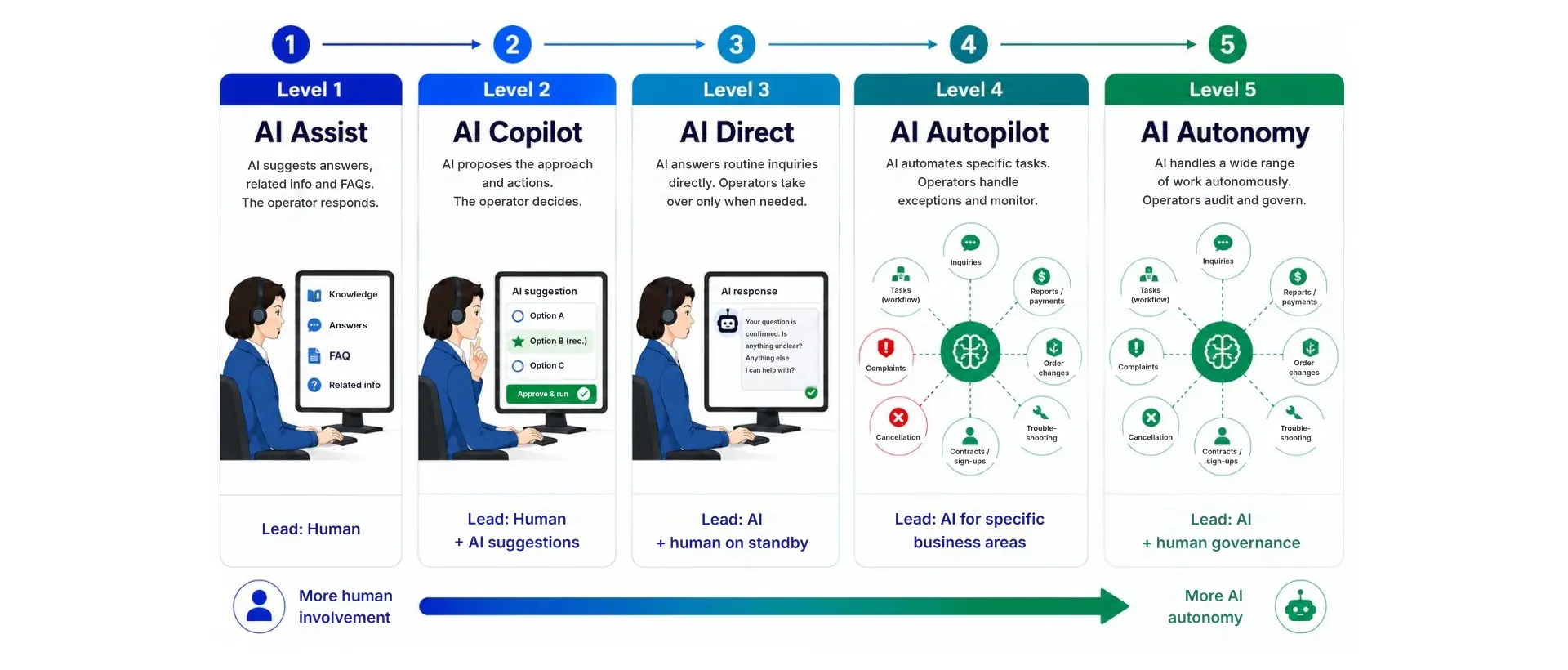
Direct AI handling can begin with a bounded set of tasks. The stages below describe Technica AI’s deployment framework; they are not an industry certification. Progression depends on representative evaluation, business risk, and agreed operational controls.
AI proposes checks, responses, and actions for operator review. This supports initial evaluation and work that requires human handling.
AI responds directly over configured voice or chat channels for approved tasks. Missing evidence, exceptions, and other defined conditions trigger clarification or human handoff.
AI performs approved routine tasks through permitted integrations within an evaluated scope. High-impact actions follow agreed approval controls; exceptions and failed operations follow escalation or recovery procedures.
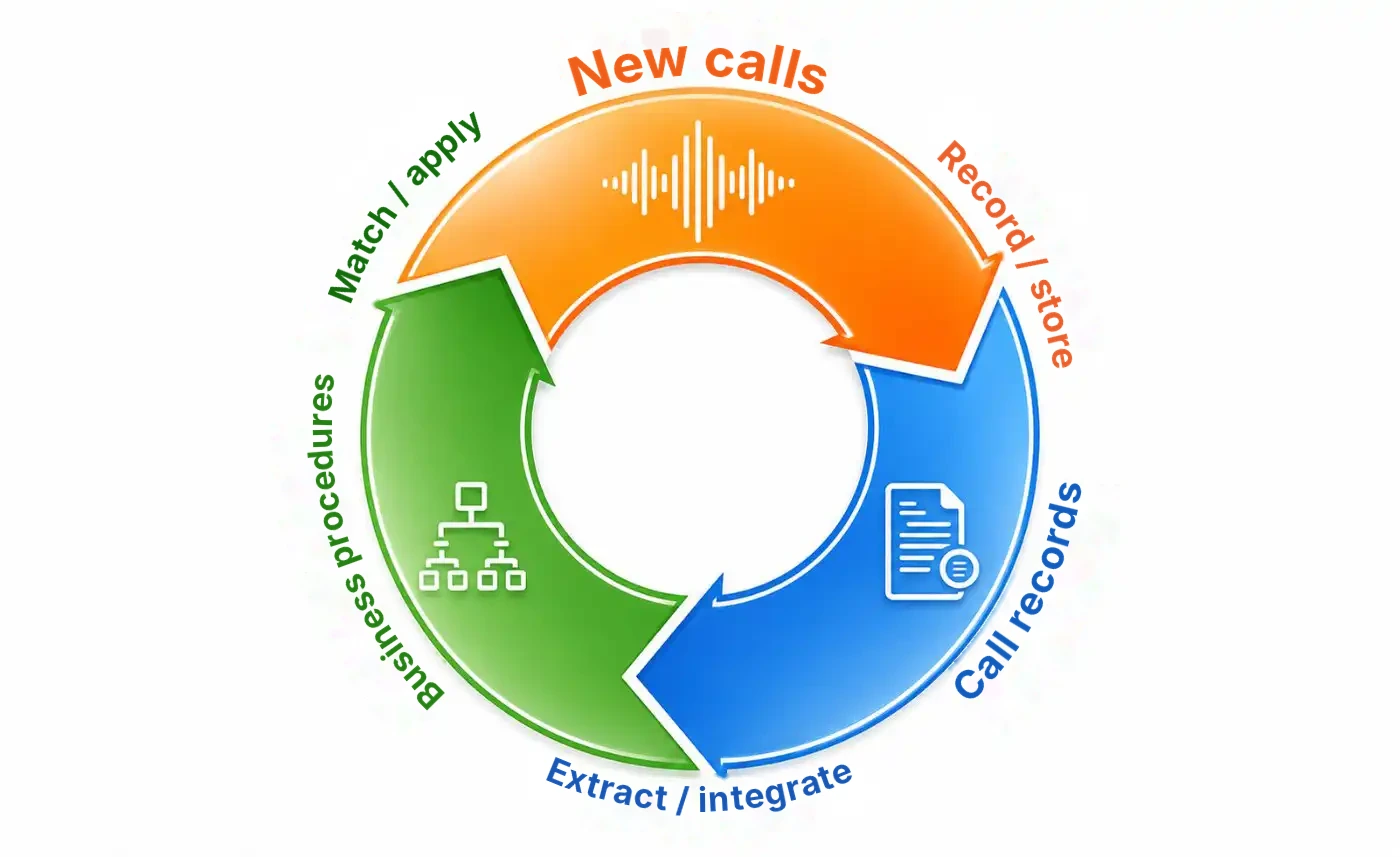
Service knowledge and operating rules need maintenance as products, procedures, and customer needs change.
Where authorized, call and chat records, agent actions, and operator feedback are analyzed for candidate improvements. Recording, data use, log access, and retention are agreed for the deployment.
Proposed updates to SOPs, FAQs, and structured knowledge are reviewed by the responsible team and tested before release. Evaluation of task outcomes and regression results guides changes; improvement is measured rather than assumed.
Start with a defined service task and representative voice or chat interactions.
We assess your approved procedures, knowledge sources, integrations, and action permissions to agree on a practical evaluation scope.
We evaluate not only answer accuracy, but also confirmation, branching, processing, handoff and task completion.
Agree on evaluation criteria for responses, required checks, authorized actions, handoff, and task outcomes. Expand direct AI handling when results and operating controls support it.